Emboo River sits beside the Talek River in the Maasai Mara. It was the Mara’s first carbon-neutral safari camp. Belgian couple Loïc Amado and Valery Super built it to prove that luxury and low impact can go together. Fresh food is part of that promise, so we built the camp’s garden.
A camp that runs on the sun
Emboo River makes everyday choices that add up:
- Solar power runs the whole camp, with lithium batteries and no generator.
- Electric safari vehicles charge at the camp garage.
- Biogas digesters turn food scraps into gas for the kitchen stoves.
- Recycled materials make up the floors, decks, wall panels and even the drinking glasses.
The challenge
Fresh vegetables are hard to find in the Mara. Most supplies travel for hours on rough roads from Nairobi. Every trip burns fuel, uses packaging and wilts the greens. The camp wanted to grow its own, just metres from the kitchen, without wasting water.
What we built
We installed a soil-free garden with four systems. Each one suits different crops:
- Rows of white growing towers for strawberries, leafy greens and herbs.
- Trough gardens for fruiting crops: tomatoes, peppers and eggplants.
- Stepped gardens for heavier greens and roots: beetroot, Swiss chard, leeks, sorrel and curly kale.
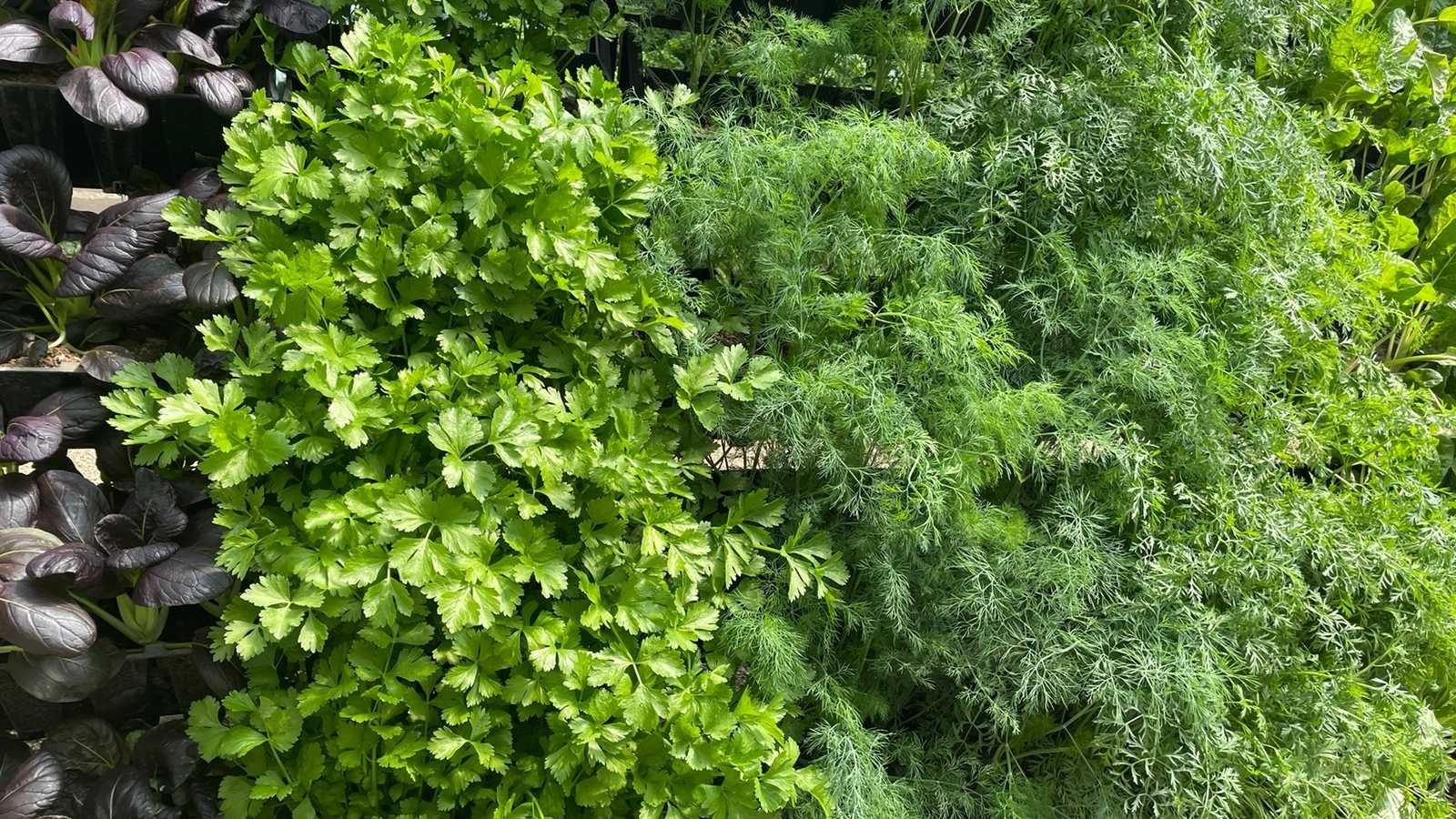
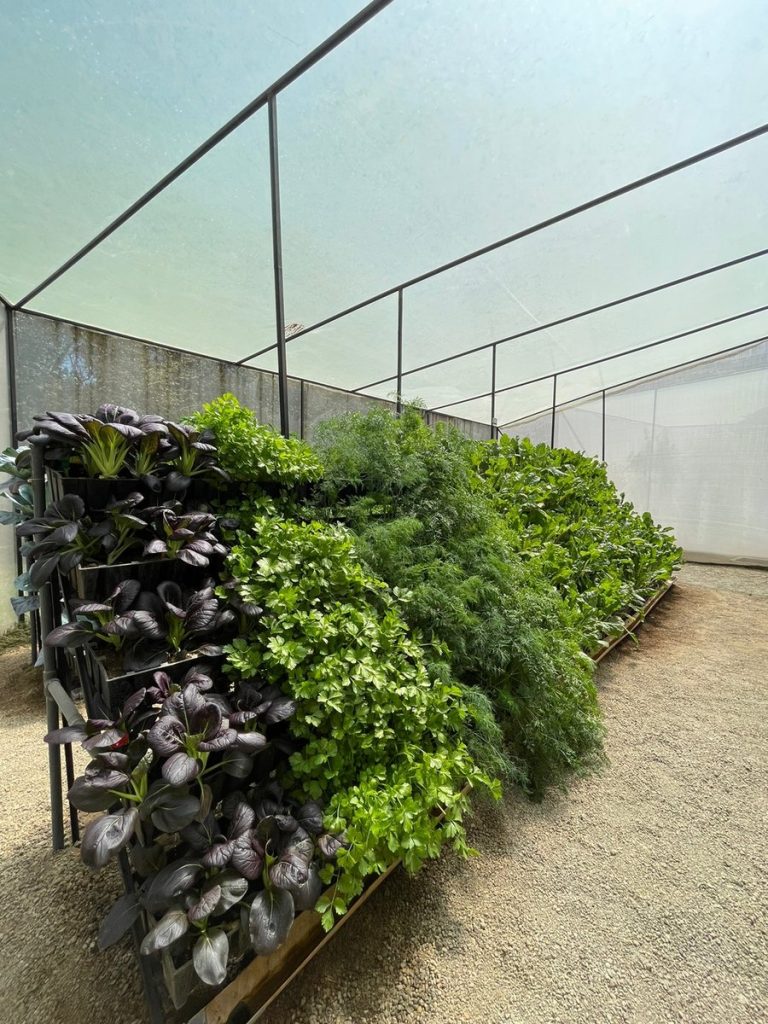
- A hydroponic wall along the path, which supplies herbs for the kitchen and the bar.
The plants grow in volcanic pumice instead of soil. Water circulates in a closed loop, so the garden uses a fraction of the water a soil garden needs.
The result
The chefs now pick fresh produce minutes before they cook it. Guests walk past the herb wall on their way to dinner, and taste the same herbs in their meals and cocktails. Food scraps go to the biodigesters, so the kitchen and garden work as one system.
A model others follow
Emboo River’s approach has travelled. The Belgian ambassador to Kenya, Peter Maddens, took it as inspiration for Belgium’s first net-zero embassy. We built vertical gardens there too. Read growing food at Belgium’s first net-zero embassy.
Today Emboo is one of Asilia Africa’s camps in the Mara. See the vertical farm we built for Asilia at Encounter Mara.
Why it works in the wild
- Fresher food: picked on site, with no long drive.
- Less fuel and packaging: fewer deliveries from Nairobi.
- Very little water: a closed loop recycles it. Read how hydroponics saves up to 90% of your water.
- Off-grid friendly: small pumps run easily on solar power.
Grow on site at your camp or lodge
Do you run a camp, lodge or hotel? We can design a garden that fits your kitchen and your location. See our systems on the Products & Services page, or book a site visit.